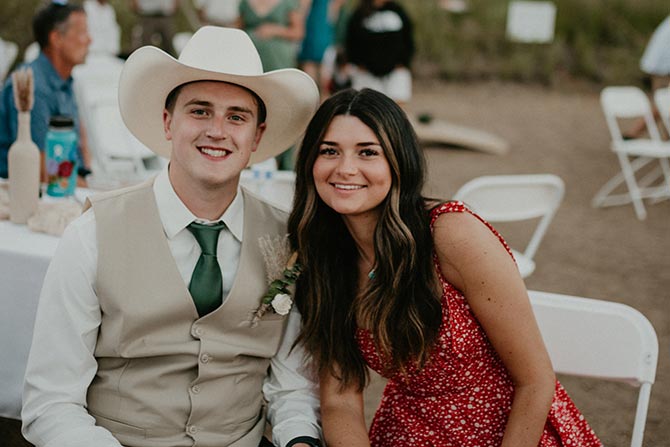



Caden Harkins did not set out to become a banker. After graduating from college in May 2022, he simply knew he wanted to return home to Montana’s Flathead Valley. An internship at Three Rivers Bank of Montana gave him that opportunity — and introduced him to a profession built around the values he already held: curiosity, care and commitment to community. Now the MIB’s 2026 Young Banker Award recipient, he sees the honor as both an affirmation and a starting point.
Caden recently sat down to discuss the mentors who shaped him, the importance of local decision-making, his full-circle service with the Highlander Track program and why the next generation of bankers should keep looking for work worth doing.
What was your initial reaction when you learned you had received the award?
I was super excited when I got the email from Shane congratulating me, and I was also pretty surprised. I didn’t know who else was in the pool or what to expect. It was a really happy moment.
What does this recognition mean to you personally and professionally?
Personally, it is rewarding to be recognized for the hard work I’ve been doing. Professionally, I see it as a launch pad. It reassures me that I’m taking the right path and doing the right things, while also encouraging me to keep going and improving from here.
How did you find your way into community banking?
Honestly, I fell into it. Right out of college, I didn’t know what I wanted to do; my main goal was to move home to the Flathead Valley. I saw that Three Rivers Bank had an internship and thought I would work there while I figured things out. Then I learned how involved the bank was in the community. That really interested me, so I stayed.
How has your role evolved since you joined Three Rivers Bank?
I started in the accounting department as an intern in May 2022. After a month or two, a personal banking position opened, and I moved into that role for just under two years. Then I became a credit analyst, underwriting commercial loans for about two years. Most recently, I transitioned into a loan officer role. I’ve been fortunate that Three Rivers Bank has given me opportunities to learn many sides of the banking industry.
Who have been your most influential mentors?
There are many people I could name. Joel Rosenberg, our senior vice president of commercial loans, took me under his wing and taught me how to work with customers and see the bigger picture. Scott Hoerth, our chief lending officer and my supervisor, has helped me grow in underwriting, standards and compliance. Sherry Bailey, our office coordinator, showed me how much a positive attitude and genuine personal connections matter. Customers know her by name, and she knows their families, their work and what is happening in their lives.
How do you build trust with customers and maintain strong relationships?
Preparation and timeliness. You’re dealing with people’s finances, and that can be stressful. Showing up prepared, knowing what you’re talking about and responding efficiently can prevent frustration for both the customer and the banker. I’ve also learned that if you don’t know an answer, say you’ll look into it and follow up. Don’t guess; guessing only pushes you into a corner.
How do community banks strengthen Montana communities?
Community banks keep decisions local. Three Rivers Bank serves the Flathead Valley through three branches — two in Kalispell and one in Whitefish — so we’re closely connected to the people who live here. A community bank doesn’t serve the community from a distance; it is part of the community.
What aspect of community banking are you most passionate about?
The community involvement. Three Rivers Bank supports local school programs, including the Highlander Track program, a free, nonprofit initiative that gives younger kids the opportunity to participate in track. I serve as treasurer on its board. That work is especially meaningful because I ran in the Highlander as a child. About 20 years later, I’m helping keep the program going so another generation can have the same amazing experience. It’s a full circle.
What motivates you to invest your time beyond the bank?
It comes from wanting to help other people. I’ve always considered myself a caring person, and banking — especially lending — lets me put that instinct to use. Whether someone is building a business, supporting a family or pursuing another goal, I can help them identify what they need and work toward success.
How has community involvement made you a better banker?
It has shown me that knowing people personally makes conversations easier and more meaningful. Once you understand what someone cares about, you begin to understand what motivates them. That helps you see what they are trying to accomplish and how, as a banker, you may be able to help.
What are you most proud of so far in your career?
Along with the Highlander program, I’m proud of the attitude I bring to work. If I’m having a bad morning, I try to leave it at the door. I want to be someone who coworkers can smile and laugh with, feel comfortable around and come to with questions. Skills and knowledge matter, but the way you show up affects everyone around you.
What goals are you pursuing in the next phase of your career?
Long-term, I would like to move into a management or leadership position within the bank, although I don’t have a set timeline. In the short term, my focus is on becoming a better loan officer: building my knowledge, growing as a banker and becoming a more reliable resource when people come to me.
What opportunities do you see for the next generation of community bankers?
New technology creates a unique opportunity. Customers will still want the personal touch of a banker, but they will also expect speed and efficiency. Younger professionals grew up with technology, so they are well-positioned to bring those strengths together — using better tools while preserving the relationships that make community banking different.
What advice would you give young professionals considering banking?
Stay curious. Banking is a profession in which becoming truly good takes time — often decades. If you feel behind at first, that’s all right; everyone feels behind when they start. I certainly did. Keep learning and looking for work. I like a line from former Montana Tech football coach Bob Green: “You’ve got to be a woodpecker in a petrified forest — just keep busy and look for work.”
What final message would you like to leave readers about community banking and service?
Community banking and community service matter because both are rooted in showing up for people. A strong community bank is more than a place to deposit money or get a loan; it is a partner in helping families, businesses, schools and local organizations succeed. When bankers invest their time, build relationships and serve beyond the bank’s walls, they help create stronger, more connected communities. Community banking works best when it is truly about the community.